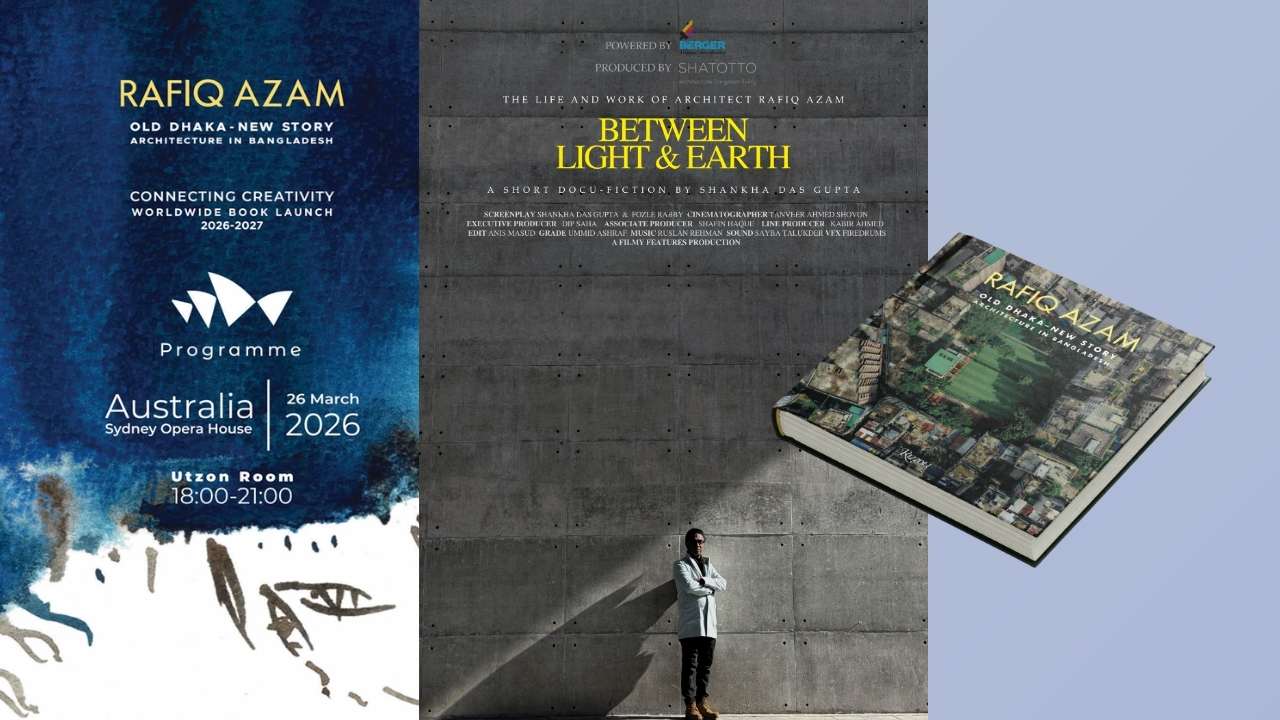
The global launch of the new monograph “Rafiq Azam: Old Dhaka, New Story — Architecture in Bangladesh” will take place on March 26 at the Utzon Room of the iconic Sydney Opera House in Sydney.
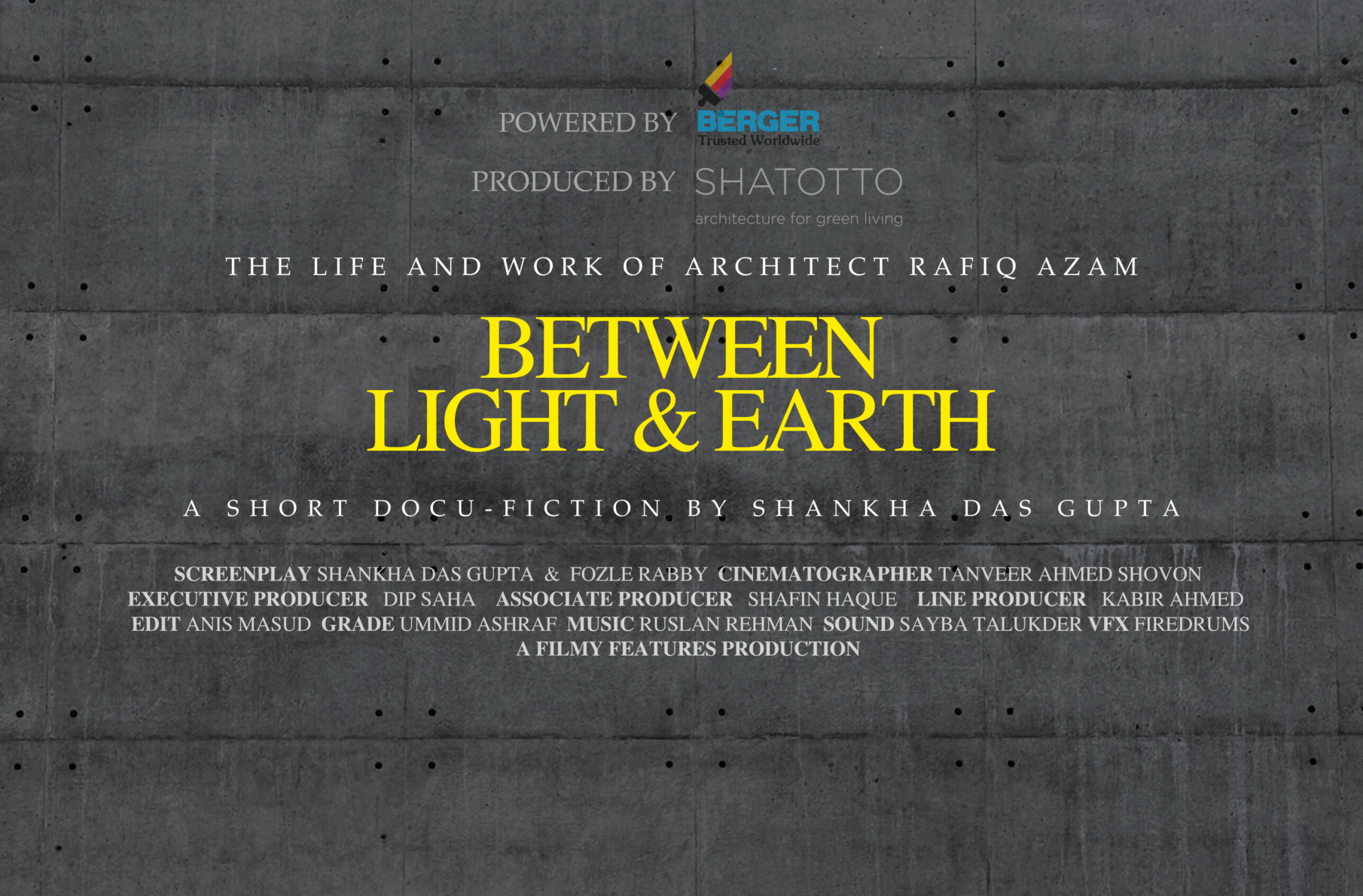
The event will also host the world premiere of the docu-fiction film “Between Light & Earth”, directed by Shankha Dasgupta, which explores the life, philosophy, and architectural journey of architect Prof. Rafiq Azam.
According to the film’s synopsis, it travels through some of Azam’s most notable works—mosques, schools, public parks, residences, and embassies—spaces designed to restore the essential elements of air, water, and light as basic human rights.
Blending observational documentary with poetic, fictionalised fragments drawn from memory and imagination, the film constructs a nuanced portrait of both the architect and the evolving city in which he works.
At its heart, the film moves beyond the discussion of architectural form to explore a deeper philosophy: the idea that design should heal, reconnect people with nature, and reinstate dignity within urban life.
It portrays architecture as an ongoing negotiation—between light and shadow, heritage and contemporary expression, memory and imagination, as well as between community needs and bureaucratic obstacles.
The groundbreaking monograph “Rafiq Azam: Old Dhaka, New Story — Architecture in Bangladesh” recounts the story of Azam, who grew up in the narrow laneways of old Dhaka.
Initially drawn to the world of art, Azam later founded the acclaimed architecture practice SHATOTTO | Architecture for Green Living.
His work reflects a unique synthesis of influences—his watercolour artistry, Bangladesh’s rich natural landscape, long-standing cultural traditions, and elements of Bengali mysticism—coming together to shape architecture that is deeply poetic and sensitive to place.

The publication features an in-depth conversation with editor Maria Rosa Falvo, alongside essays by distinguished architects and scholars including Kenneth Frampton, Shamsul Wares, Fuad H. Mallick, Philip Goad, and George Kunihiro.
Bringing together these varied perspectives, the book positions Bangladeshi architecture within a broader global conversation on culture, creativity, and contemporary design.