Ruplal House, at present, is a living embodiment of our diabolical legacy of prioritizing greed over beauty and collective amnesia toward preserving our own significant history.
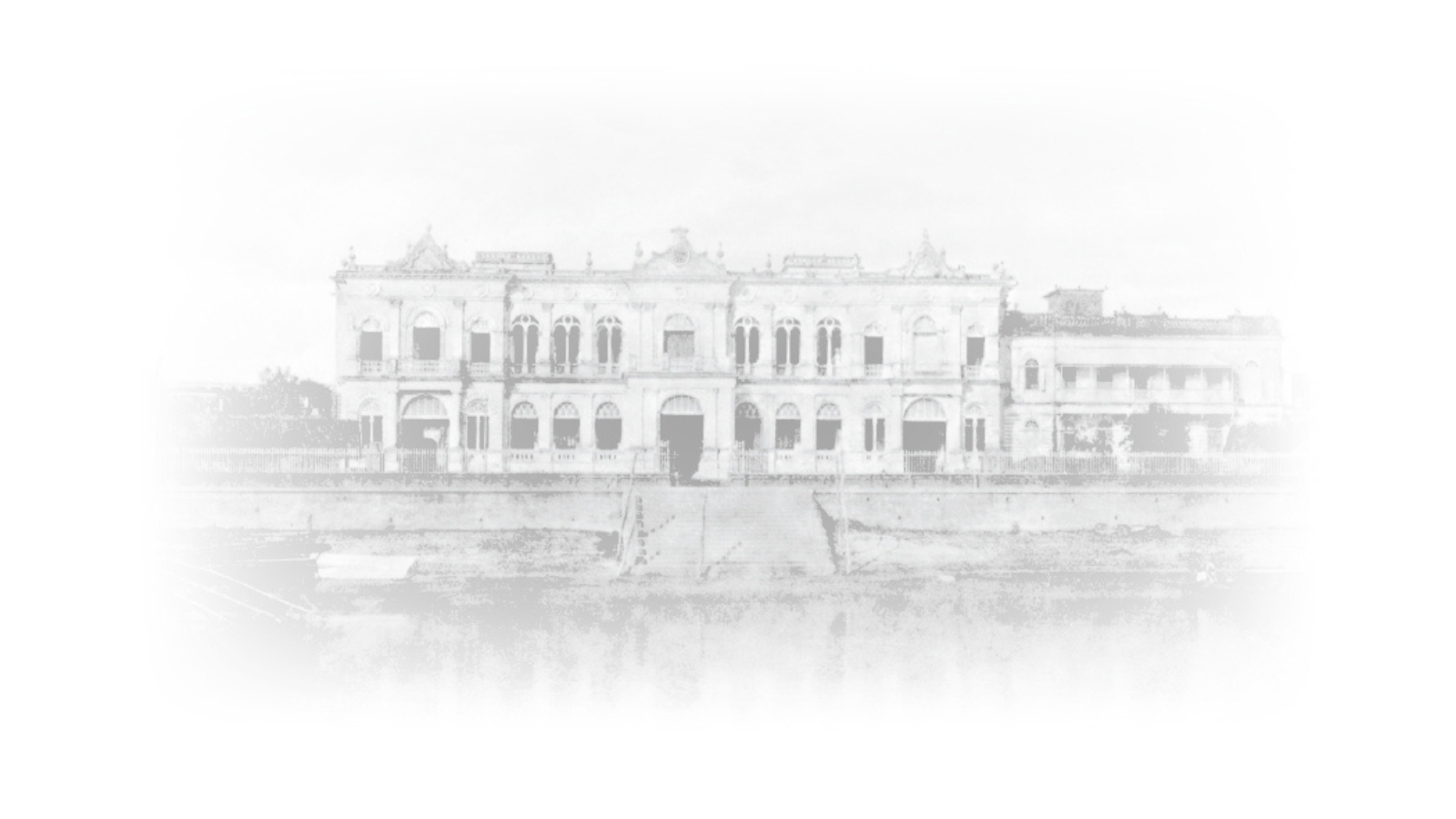
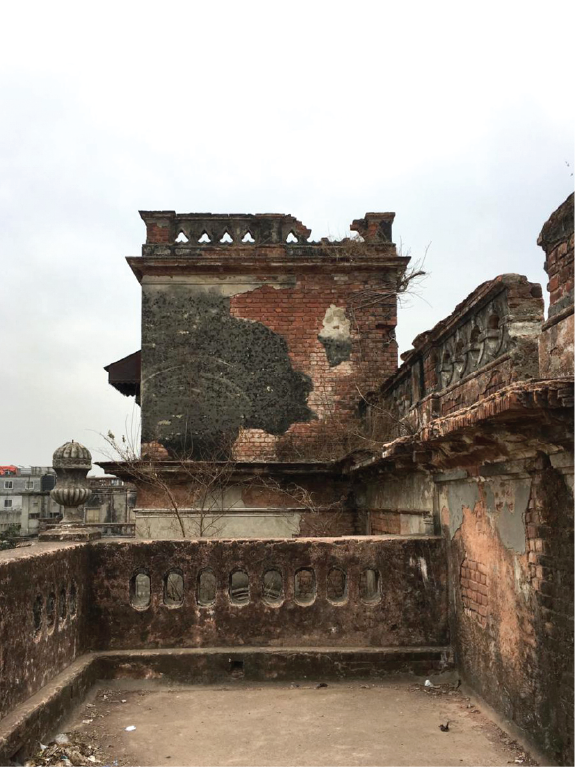
Standing quietly on the banks of the now polluted, dark-watered Buriganga River, Ruplal House is one of Dhaka’s most quintessential architectural relics of the colonial period. The mansion, once a symbol of prosperity, power, and taste, is now in ruins, covered in moss and the shadows of neglect. Nonetheless, even in its current form, Ruplal House’s architectural grandeur speaks of a time when Dhaka was not just a developing city but also a bustling center of trade, culture, and aristocracy.
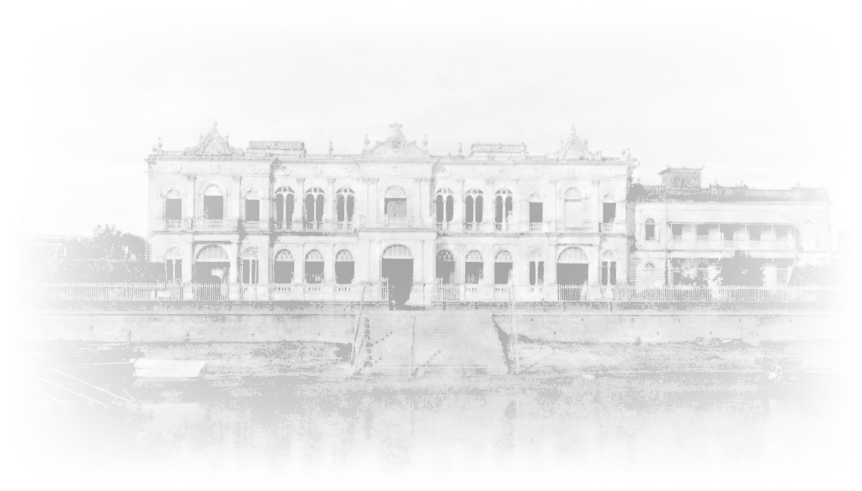
Stephen Aratoon, an Armenian businessman, erected the mansion in 1825. Around the 1840s, two wealthy merchant brothers, Ruplal Das and Raghunath Das, bought the land from Aratoon and converted it into one of the region’s most luxurious private residences. Martin & Co., a well-known architectural firm headquartered in Calcutta, oversaw the renovation and enlargement.
Ruplal House’s architecture combines European neoclassical style with local colonial adaptations. The house is roughly ‘E’ shaped and spans a large area; its most visually arresting element is the central portico, which is supported by a set of Corinthian columns that immediately transport one to the big municipal structures of the Victorian era. Brick masonry is used to construct the structure, which is then coated in lime plaster and stucco. The three-story structure has lofty ceilings, lengthy verandas, Venetian-style windows, and ornate parapets. The mansion was separated into two wings. The family lived in the eastern wing, while the western side had a big ballroom, guest rooms, and service quarters.
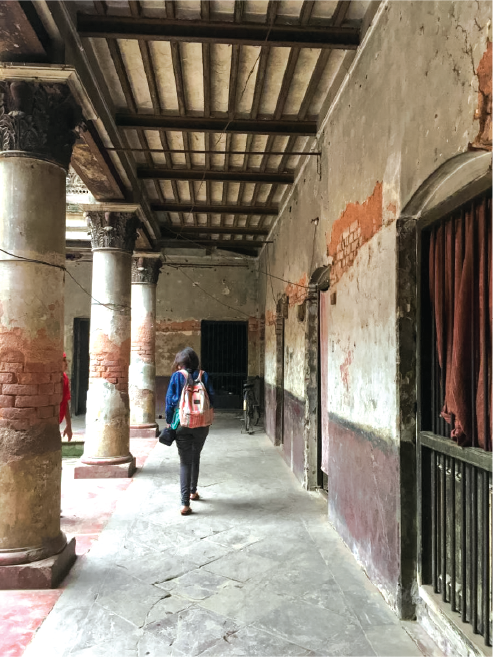
The enormous dance hall was the western block’s standout feature. It is reported that the interiors formerly included European chandeliers and Italian marble. The dance hall, with its hardwood floor, hosted many luxurious evenings of music and fun.
Ruplal House’s glory, however, was short-lived. The decline began in the early twentieth century, when the family’s fortune decreased and political changes altered the city. The partition of Bengal, followed by India’s independence and the establishment of East Pakistan, finally destroyed the aristocratic lifestyle that had previously supported such palaces.
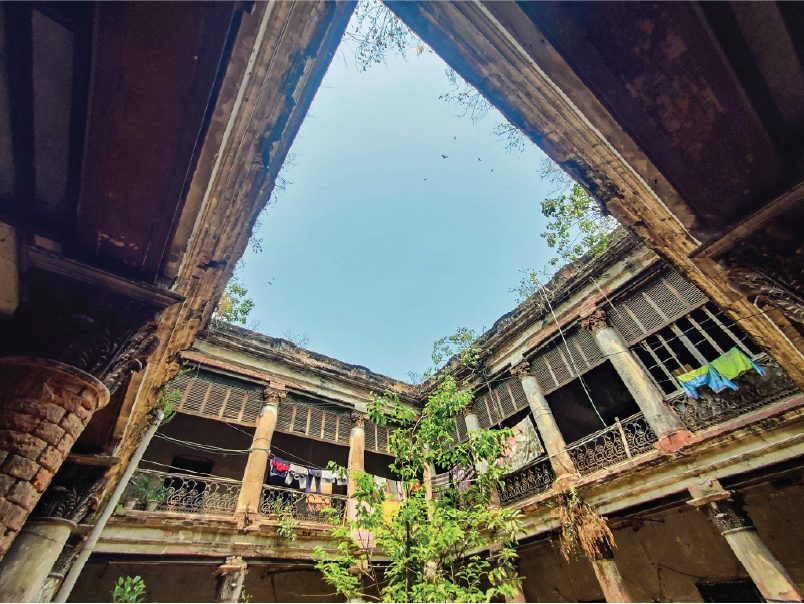
Ruplal House is now a ‘disputed’ property, with more than three parties claiming ownership of the building (west block). A wholesale spice bazaar inhabits the mansion illegally, which is unpleasant to look at. There are also additional stores placed around the home. Many of them were constructed by destroying a portion of the structure. According to elderly locals, more than 90% of the house’s outside wall was destroyed during the procedure. Furthermore, for more than 40 years, around 24 families of personnel of the security services have lived on the first floor of this building.
The inhabitants substantially changed and enlarged both sides of the home, causing significant harm to its archeological importance. The continued possession of the home by these private firms, many of which claim tenant rights under archaic legislation, makes eviction and renovation legally problematic and a significant impediment to any restoration attempt.
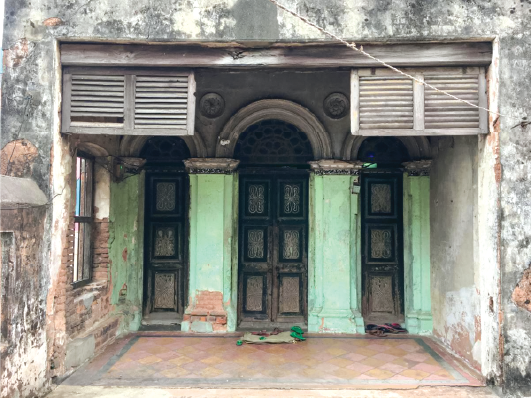
The once-majestic mansion now exists in a horribly dilapidated state. Despite being a designated heritage property, no significant repair work has been completed. However, glimpses of its beauty remain. The mansion emanates dignity, even in its state of ruin. When the sun sets over the Buriganga and its light streams through the shattered shutters, one can almost hear the voices of history.
Ruplal House is more than simply a structure; it is a collection of stories about prosperity and decay and architectural conversation between East and West. It remains a silent ghost of a bygone period, waiting for Dhaka to halt, reflect, and maybe rebuild.
Photo: Farhat Afzal | Heritage Walk Dhaka