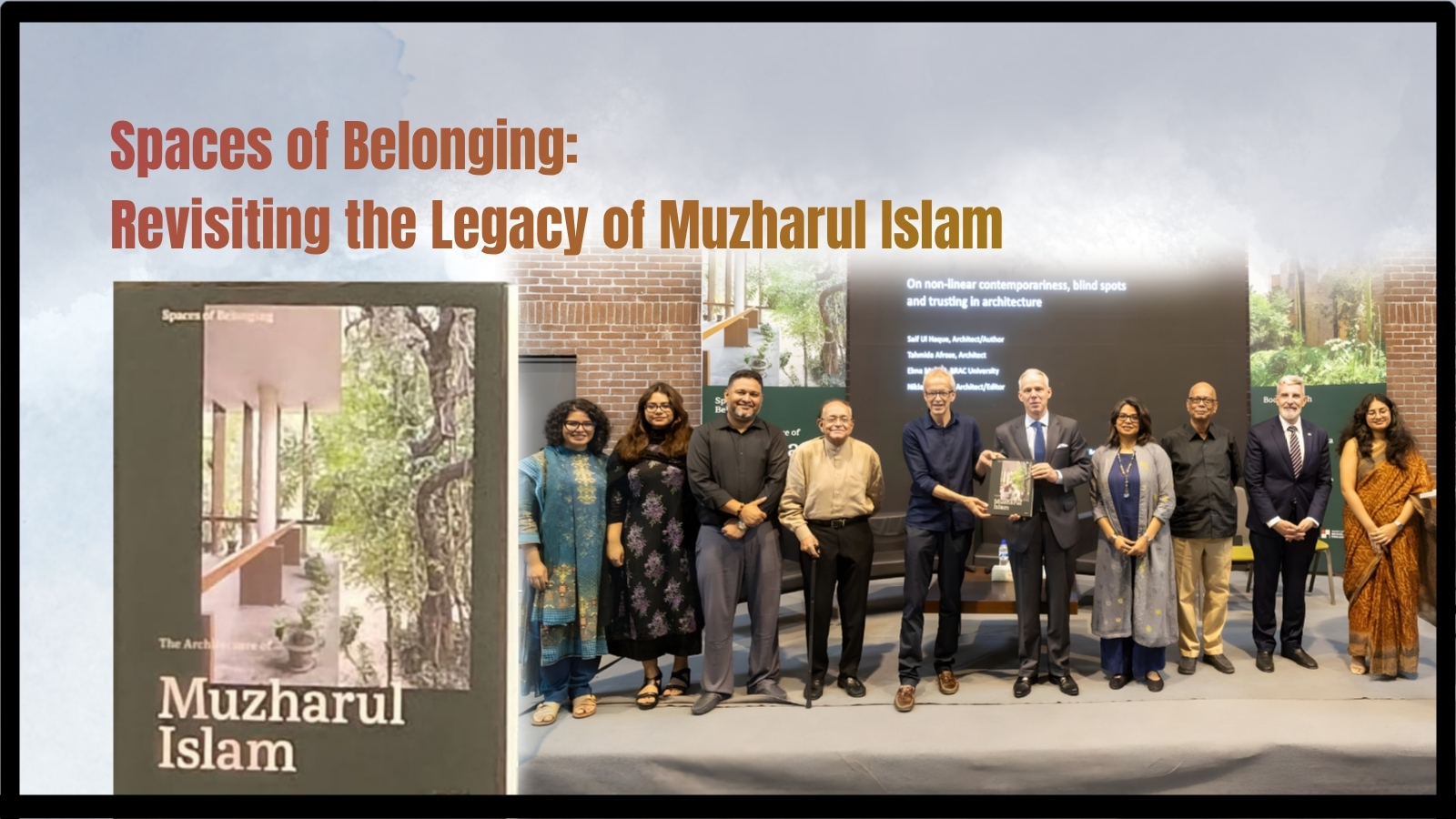
The IAB Centre in Dhaka turned into a site of reflection and celebration on April 25, 2026, as “Spaces of Belonging – The Architecture of Muzharul Islam” was unveiled—honouring the pioneer of modern architecture in Bangladesh.
The event opened with a sense of diplomacy and dialogue, as representatives from Switzerland highlighted the book’s role in connecting cultures across continents.
His Excellency H.E. Reto Renggli, Ambassador of Switzerland to Bangladesh, reflected on Muzharul Islam’s enduring legacy, positioning the book as more than documentation—a bridge between Switzerland and Bangladesh.
He highlighted the Swiss Embassy’s active role in supporting and backing the publication and its related exhibitions, which have already generated growing international interest in Islam’s work.
Book editor Niklaus Graber offered a compelling reflection on his documentation journey. Influenced by both Muzharul Islam and Louis I. Kahn, he came to understand that Bangladesh’s architecture is deeply intertwined with its rivers—the nation’s soul.
His extensive research revealed that Muzharul Islam’s true genius lay in perpetual curiosity rather than mere construction. This exploration, which took him 14 years to fully grasp, became the foundation of the book, meticulously documenting ten of Islam’s major works
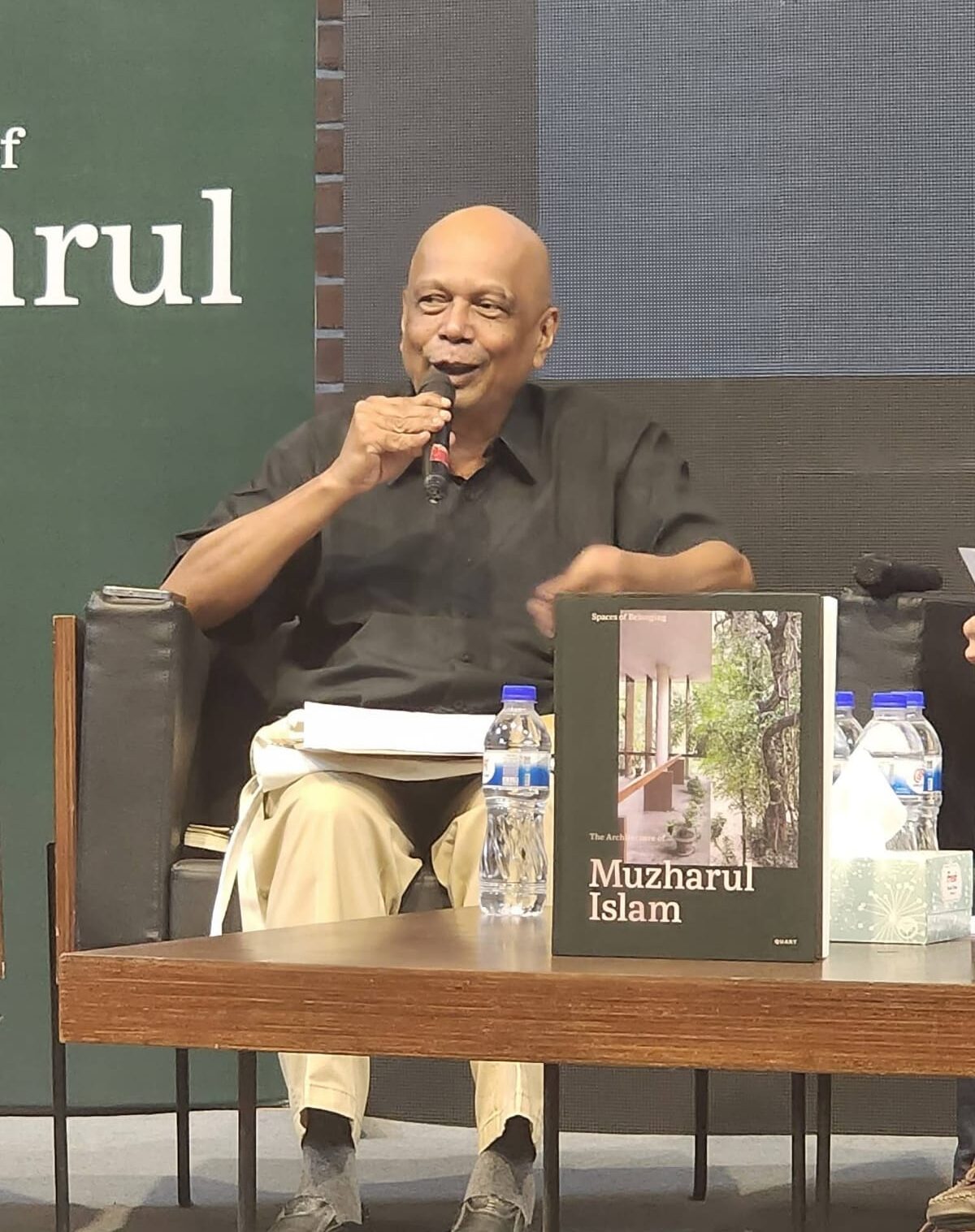
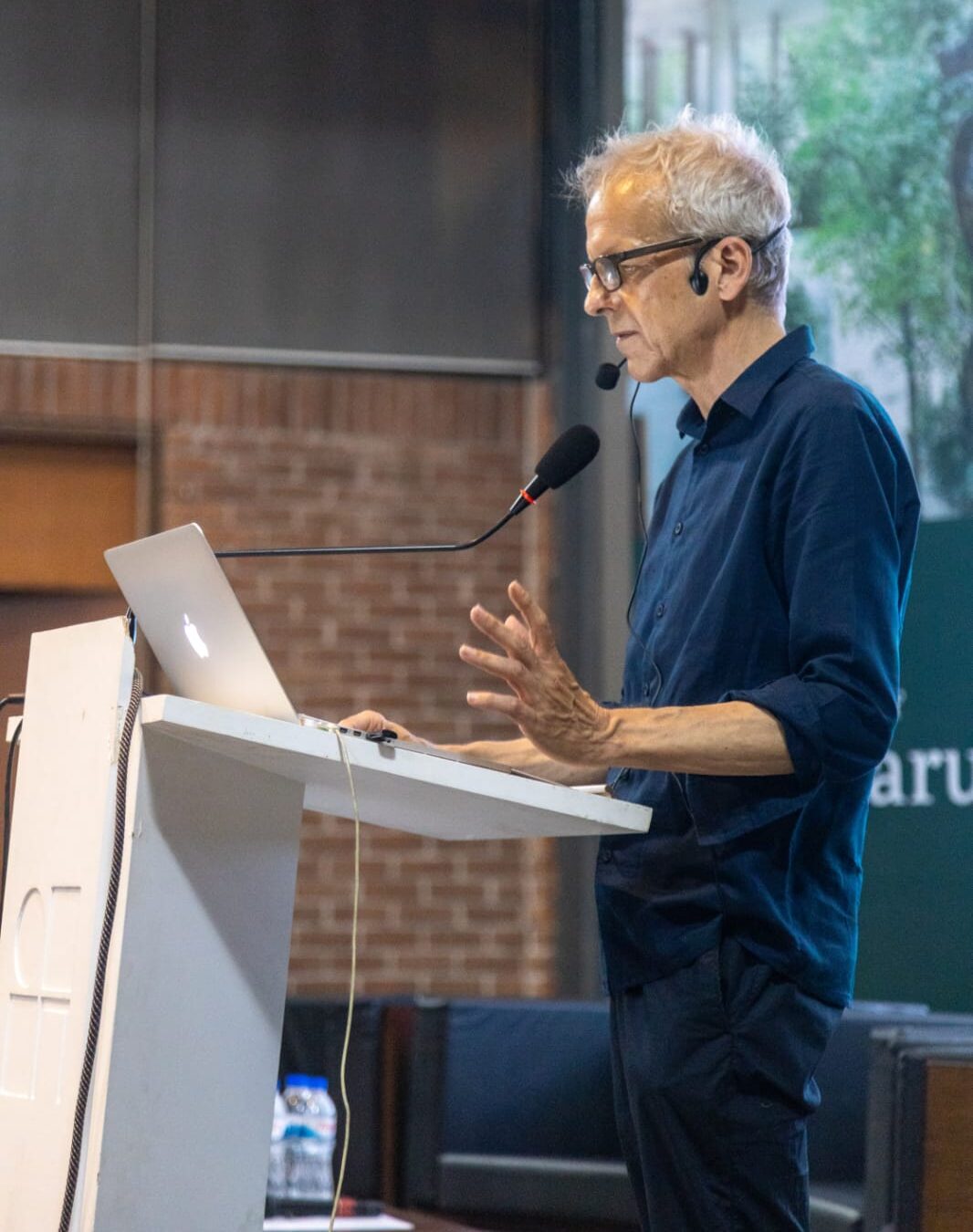
More than a book launch, the event was a homecoming for the architectural community. Architects, thinkers, and admirers gathered to honor Muzharul Islam, not just as a pioneer but as a living presence in today’s discourse.
Ar. Nowajish Mahbub praised the work for its precise documentation of Islam’s climate-responsive genius, while Ar. Dr. Md. Nawrose Fatemi captured the spirit of the book, describing it as a “living dialogue” that bridges local history with global relevance.
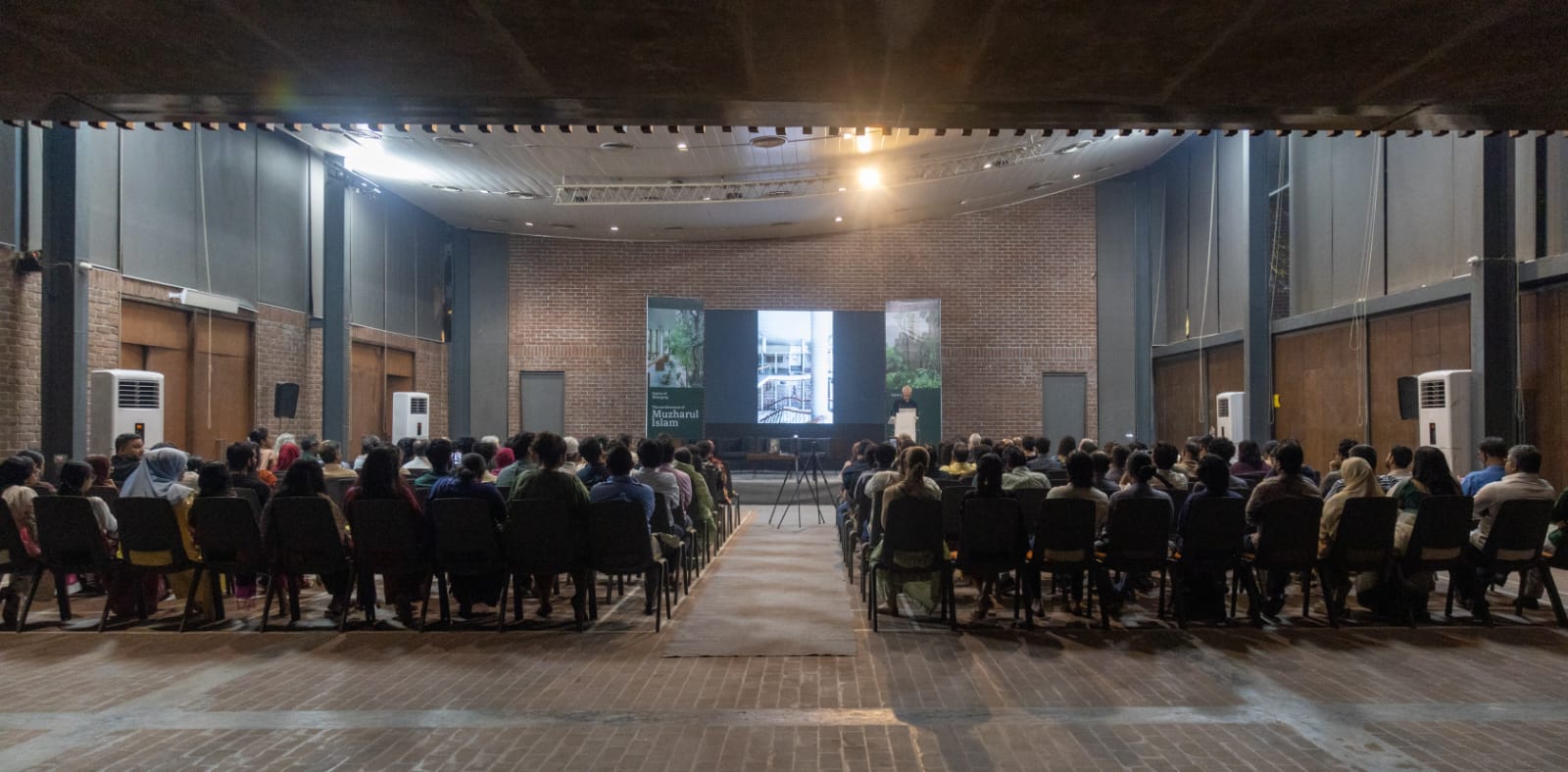
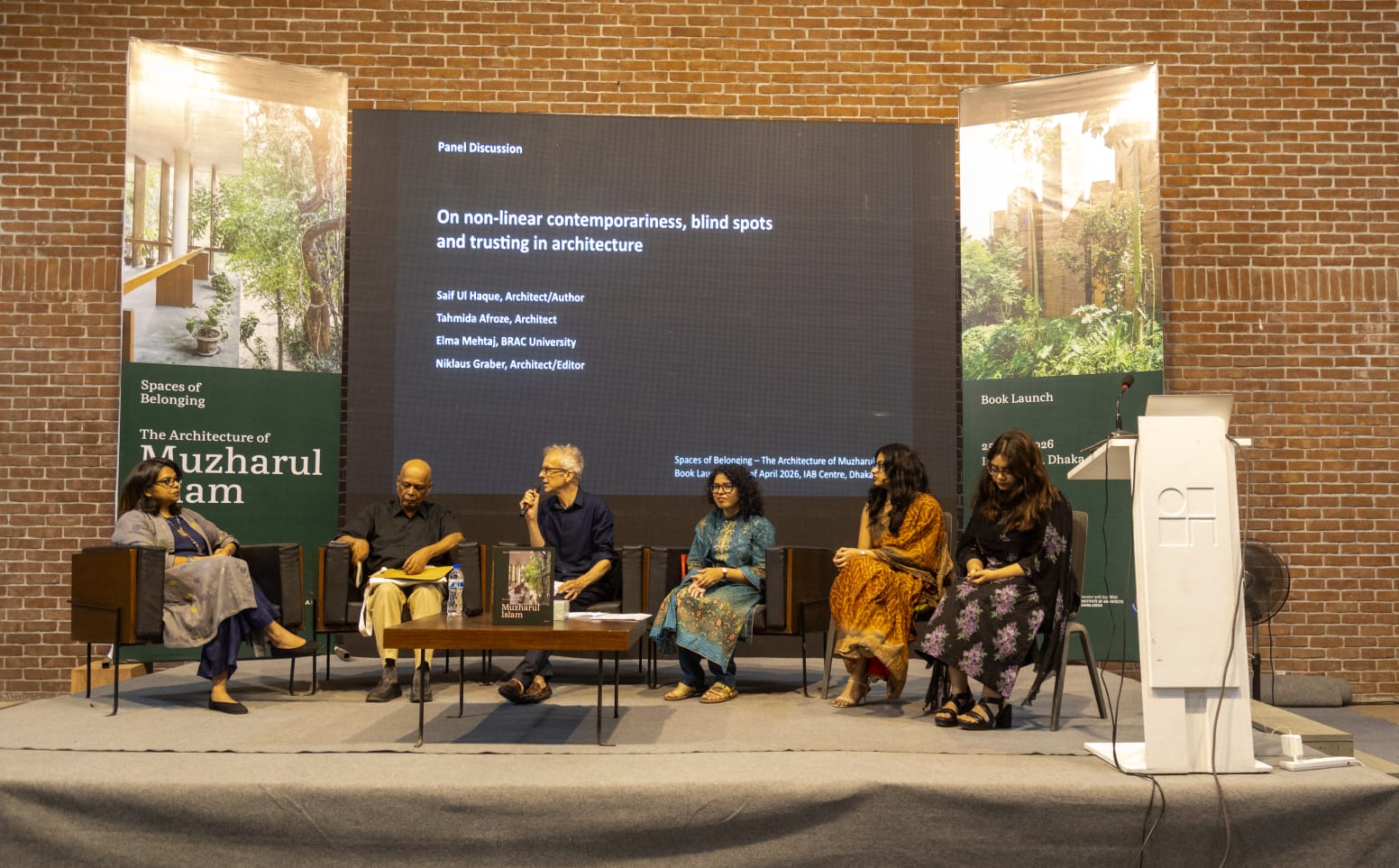
This spirit of inquiry continued in a vibrant panel discussion with Ar. Saif Ul Haque, Ar. Tahmida Afroze, and Elma Mehtaj. They pivoted the conversation to the future, questioning how Islam’s human-centered philosophy serves modern practice.
In essence, the book commemorates a legacy where architecture is rooted in identity, place, and people—reminding us that meaningful design emerges from profound engagement with the land it belongs to.